Sunseeker CEO: AI and GPS Could Put Robot Mowers in Half of US Homes
A contributed op-ed argues that satellite navigation and AI planning are finally making robotic mowers ready for mainstream adoption
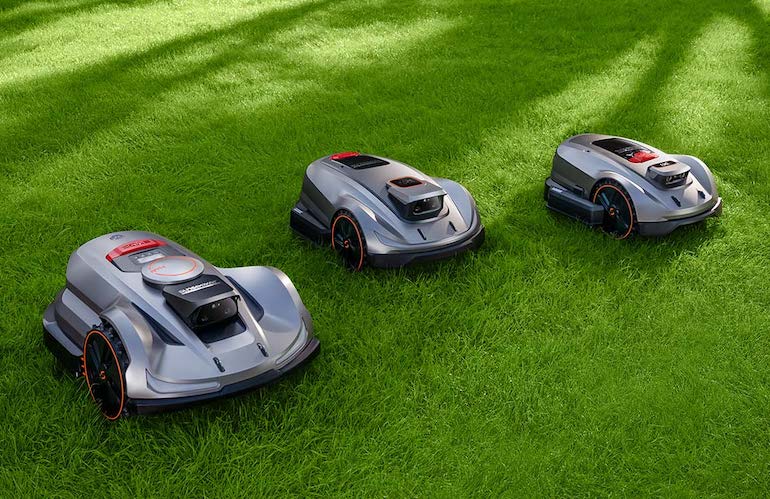
Robotic lawn mowers have long been seen as a fussy, install-heavy niche product. According to an opinion piece published by The Robot Report, that era may be ending, thanks to a combination of AI planning, satellite navigation, and improved autonomy.
The article was written by Terry Ma, founder and CEO of Sunseeker Robotics, an outdoor robotics company he founded in 2009. Ma writes that the underlying technology shift — not just incremental product polish — is what makes this moment different. "I believe the industry is entering a phase comparable to the 'iPhone moment' experienced by other technology categories," he states.
According to the piece, the global lawn mower market generated $35.2 million in 2025 and is projected to reach $63.2 million by 2033, a trajectory Ma cites as evidence of growing consumer trust in autonomous outdoor tech. Based on Sunseeker's own market analysis, Ma projects the US robotic lawn mower market could approach 50% household penetration within the next eight years, driven by falling costs, better AI, and rising consumer awareness.
On the technology side, the article credits real-time kinematic (RTK) positioning — a satellite-based navigation method that delivers centimeter-level location accuracy — combined with 4G connectivity linking mowers, cloud systems, and mobile apps. Together, these let modern mowers plan routes, optimize coverage, and avoid obstacles in real time rather than simply following wires buried around a yard's perimeter, as older systems required.
Ma argues that the biggest remaining obstacle isn't technical but perceptual: many consumers still associate robotic mowers with older, wire-dependent, maintenance-heavy models, even though wireless and satellite-guided systems have simplified installation considerably. He compares the situation to earlier adoption curves for robot vacuum cleaners and smart thermostats, which moved from early-adopter niches to mainstream products as usability improved.
The piece also points to commercial landscaping as a parallel growth path. It cites the US commercial landscaping industry growing at an average annual rate of 6.5% between 2020 and 2025, and notes that the US landscaping services sector employs well over 1 million people, with companies frequently struggling to recruit and retain seasonal outdoor workers. Ma frames autonomous mowers as a way to offload repetitive, physically demanding tasks — particularly during extreme heat — while freeing workers for higher-value activities. Lightweight commercial mowing robots are already on the market, according to the article, with more capable systems expected in coming years.
Ma frames the broader shift as a move from lawn mowing as a manual chore to lawn care as an autonomous, continuously managed service, with recovered time redirected toward family, rest, or other priorities.
Sunseeker itself, according to the article's author bio, now operates in more than 40 countries and is sold in over 5,000 retail stores worldwide. The company closed a Series B funding round worth nearly RMB 500 million (about $74.3 million) in early 2026.
Because this piece is a contributed opinion column from a robotic-mower company executive rather than independent reporting, its market projections and adoption forecasts reflect Sunseeker's own analysis and commercial perspective, as reported by The Robot Report.
talk to a robot
Wrong facts, cryptic artwork, missed news — pick the robot in charge and tell it directly. Litmus verifies the facts; what lands gets a thank-you engraved here.