How Digital Twins Help First-Time Buyers Test Automation
Simulation software lets manufacturers model robotic cells and catch problems before spending on hardware.
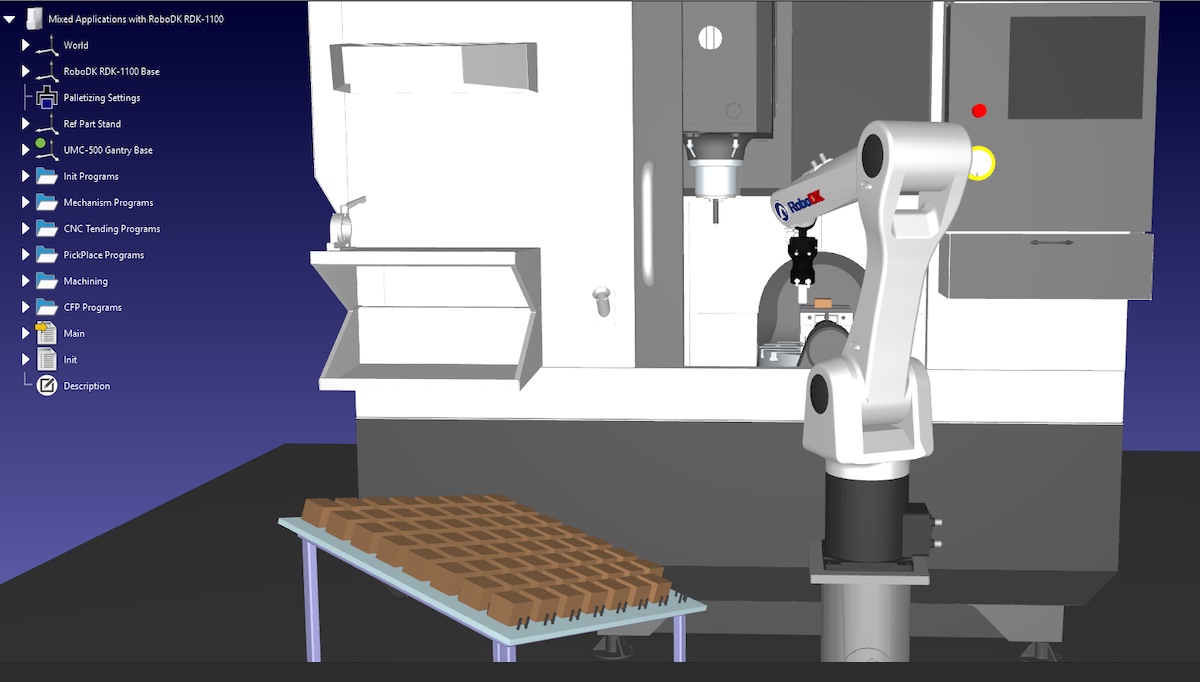
Deciding where to start with industrial automation can be overwhelming, especially for manufacturers that have never deployed a robot before. That's the premise of an opinion piece published by The Robot Report and written by Albert Nubiola, founder and CEO of RoboDK, a company that makes digital twin and offline programming software for industrial robots.
According to the article, thousands of industrial robots, end effectors, and peripherals exist across many brands, and the number of possible combinations can make it hard for first-time buyers to know which robot size, gripper, or layout fits their application. Questions about floor space, throughput, integration with existing machines, vendor lock-in, and return on investment often stall projects before they start — a hesitation the piece says is compounded by global economic uncertainty, rising energy costs, and tighter scrutiny of capital spending.
Digital twin software, the article argues, offers a way to keep exploring automation ideas without spending money on hardware. A digital twin is described as a virtual model of a robotic cell that can include the robot, end-of-arm tooling, fixtures, conveyors, sensors, operators, and surrounding equipment. Unlike static CAD drawings or spreadsheets, a digital twin is dynamic: it can show whether a robot can reach every required position, test trajectories and toolpaths, estimate cycle times, flag collision risks, and check operator access and maintenance clearance.
The piece gives an example of a CNC machine-tending application. On paper, the process looks simple — a robot loads a part, waits through the machining cycle, then unloads it. But simulating the actual setup in a digital twin can reveal that chuck cycles or part-settling times create more idle time than expected, that a particular gripper struggles with the part's geometry, or that a dual-grip design would improve the cycle. The article notes the same approach applies to pick-and-place, welding, trimming, dispensing, inspection, palletizing, robotic machining, and teleoperation tasks.
On what to look for in a digital twin tool, the article suggests manufacturers seek a broad library of robots and peripherals to reduce the risk of getting locked into one vendor, along with features like collision checking, reachability analysis, robot calibration, offline programming, and automatic code generation. For CAM-based robotic machining specifically, it recommends software that can generate toolpaths from CAD files, simulate machining processes, and scale from simple three-axis jobs to complex multi-axis work. Usability is also emphasized, since enterprise-grade platforms can be costly and complex for a company exploring its first robotic cell.
Importantly, the article frames digital twins as a complement to, not a replacement for, system integrators. Many integrators already use this kind of software internally to develop concepts, compare robot brands, validate reachability, generate code, and present proposals. A manufacturer that has already tested layouts and cycle-time targets in simulation, the piece suggests, can enter vendor conversations with clearer priorities, which can improve quoting accuracy and shorten planning cycles.
RoboDK itself is cited as an example throughout, described as supporting robots "from more than 1,400 brands" in one part of the article and, in the author's bio, as a platform that "has grown to support over 1,400 robot arms from 80 different manufacturers." Nubiola founded RoboDK in 2015 as a spin-off from the CoRo laboratory at École de Technologie Supérieure (ÉTS) in Montreal.
As reported by The Robot Report, the broader message of the piece is that digital twins can turn stalled automation ideas into testable, informed proposals — letting manufacturers de-risk their first serious steps into robotics before any hardware, floor space, or final system design is locked in.
talk to a robot
Wrong facts, cryptic artwork, missed news — pick the robot in charge and tell it directly. Litmus verifies the facts; what lands gets a thank-you engraved here.